 Call us now
Could Your Property Management Company Survive a 2 AM Emergency?
- 24/7 property management support
- after-hours property management
- emergency maintenance response
- property management emergency line
- tenant retention property management
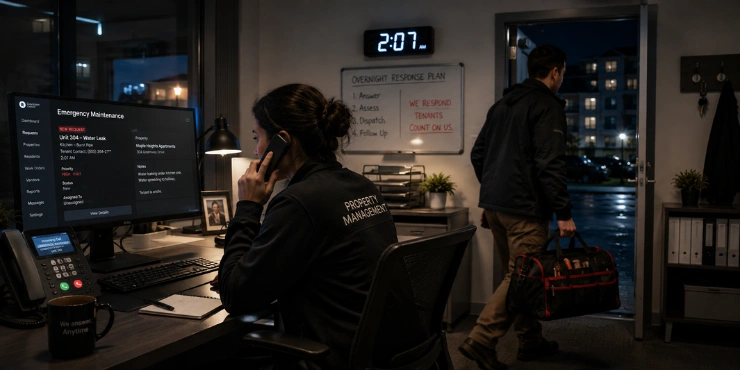
It's 2:07 AM. A pipe bursts in unit 4B, water is already pooling toward the hallway, and a tenant is standing in their kitchen with a phone in hand, scrolling through a property management app looking for anyone — anyone — who might actually pick up. The emergency line rings. It goes to voicemail. By the time someone from the office hears about it at 8 AM, the damage has spread to two units below, the tenant has already posted about it online, and what should have been a $400 plumbing call is now a five-figure repair with an angry resident threatening to break their lease.
This scenario plays out more often than most property management companies want to admit. And the uncomfortable question underneath it isn't "do we have an emergency line" - almost everyone does. It's "what actually happens when that line rings at 2 AM."
The Emergency Line Isn't the Same as Emergency Readiness
Most property management companies have some version of an after-hours contact number. Far fewer have tested what actually happens when it's used outside business hours, at scale, under real pressure. A number that forwards to a property manager's personal cell, who may be asleep, traveling, or simply unable to answer every call across a growing portfolio isn't a system. It's a hope.
Real emergency readiness means someone is actually available, actually equipped to assess the situation, and actually empowered to dispatch help immediately - not "we'll get back to you first thing in the morning." The gap between having a number and having 24/7 property management support is exactly the gap that turns a manageable incident into a costly one.
Why 2 AM Is When the Real Test Happens
Daytime emergencies are, relatively speaking, the easy version of the problem. Staff are on-site or reachable, vendors are open, decisions can be made quickly with a full team available. The real test of a property management company's infrastructure is what happens during the hours nobody's actively watching: think late nights, weekends, holidays, when a burst pipe, an electrical failure, a lockout, or a break-in doesn't wait for business hours to happen.
That mismatch is where reputations get made or broken. A tenant doesn't remember how smoothly rent collection worked all year. They remember whether someone answered when their apartment was flooding at 2 AM, and how fast a real response actually followed that call.
The Cost of Getting It Wrong Compounds Fast
An unanswered emergency call rarely stays contained to the original problem. Water damage spreads while nobody's dispatched to shut off a valve. A gas smell goes unreported to the right authority for hours instead of minutes. A lockout in freezing weather becomes a liability issue, not just an inconvenience. Every hour of delay doesn't just make the physical problem worse; it erodes the trust that keeps tenants renewing leases and owners keeping their properties under management.
And the damage isn't only financial. In a market where tenants compare property management companies in reviews the same way they'd compare a restaurant, a badly handled emergency becomes public record fast, exactly the kind of story that shapes whether a prospective renter chooses one building over another.
What Real Coverage Actually Looks Like
Surviving a 2 AM emergency isn't about heroics from an exhausted on-call manager. It's about having a structured system: a live person answering the call immediately, a clear protocol for triaging the severity of the issue, and a dispatch process that gets the right vendor or emergency service moving within minutes, not hours. It also means documentation happening in real time, so the daytime team isn't reconstructing what happened from a groggy voicemail the next morning.
That level of consistency is difficult for any single property management company to staff internally around the clock, which is exactly why dedicated 24/7 property management support has become less of a premium add-on and more of a baseline expectation, especially as portfolios grow and tenant expectations for responsiveness keep rising.
The Real Question Isn't "What If" — It's "When"
Every property management company will eventually get that 2 AM call. The only real variable is whether the response is immediate and structured or delayed and improvised. Given how quickly a small emergency can compound into a major loss—financially, reputationally, and in tenant trust, treating after-hours readiness as an afterthought is one of the more expensive gambles a property management business can make.
Property Management Backoffice provides dependable 24/7 property management support so no emergency call goes unanswered, no matter what time it comes in. Visit propertymanagementbackoffice.com to make sure your properties and your reputation are covered around the clock.
People Also Ask
Q1. What's the difference between an emergency line and real emergency readiness?
A1. An emergency line is just a phone number that forwards somewhere—often to a property manager's personal cell, who may be asleep or unreachable. Real emergency readiness means a live person actually answers, assesses the situation, and dispatches help immediately, not "we'll get back to you in the morning."
Q2. Why is a 2 AM emergency call the real test of a property management company?
A2. Daytime emergencies are easier to handle since staff and vendors are already reachable. The real test happens during off-hours—nights, weekends, holidays—when nobody's actively watching, and that's exactly when tenants judge whether a company is reliable.
Q3. How much can an unanswered emergency call actually cost?
A3. It compounds fast. A burst pipe left unaddressed can spread water damage to multiple units, turning a $400 plumbing call into a five-figure repair—on top of reputational damage from tenant reviews and lease non-renewals.
Q4. What does effective 24/7 property management support actually include?
A4. A structured system: a live person answering immediately, a clear triage protocol for severity, a dispatch process that moves within minutes (not hours), and real-time documentation so the daytime team has a full record instead of a rushed voicemail recap.
Q5. Can property management companies realistically staff this in-house?
A4. The blog frames this as difficult to sustain internally around the clock, especially as portfolios grow—which is why dedicated outsourced 24/7 support has shifted from a "premium add-on" to a baseline expectation.
